

Here’s the uncomfortable truth:
There is no perfect sitting position.
You can have the world’s most ergonomic chair, your monitor at exactly the right height and your lumbar support perfectly adjusted, and still end up with a sore back by 3pm.
Why? Because the problem isn’t necessarily how you sit — it’s that you stay in the same position for too long.
The posture myth
We’ve been taught to search for the “correct” way to sit:
- Shoulders back.
- Chin tucked.
- Feet flat.
- Hold.
But your body is designed to move, adapt and change. Even a comfortable, well-supported position can become uncomfortable when you stay there for hours — muscles fatigue, joints and your spine can become stiff, and your body starts craving a change.
So instead of searching for one perfect position, let’s change the goal.
Your best posture is your next posture
Think movement, not perfection.
Shift often. Lean back. Lean forward. Cross your legs. Uncross them. Move around in your chair.

Stand regularly. You don’t need a 20-minute break. Even a minute or two can give your body a much-needed change.
And use that minute however you like:
- Do 5 squats.
- Try a few heel raises.
- Roll your shoulders.
- Give your upper back a stretch.
- Take a few steps around the room.
- Or simply stand and change position.

Change your sitting surface. If you’re working from home, try moving between your desk chair, a Pilates ball or even a different chair. A different surface changes the way your body is working.
Change your environment. Move from your desk to the kitchen counter for a few minutes. Stand while answering emails. Take your laptop to a different surface. If you have a walking pad, use it for a meeting or a task that doesn’t require you to be glued to your screen.

Use your phone calls. Take a meeting standing up. Walk around the house while you’re on a call. Pace while you’re thinking through a problem.
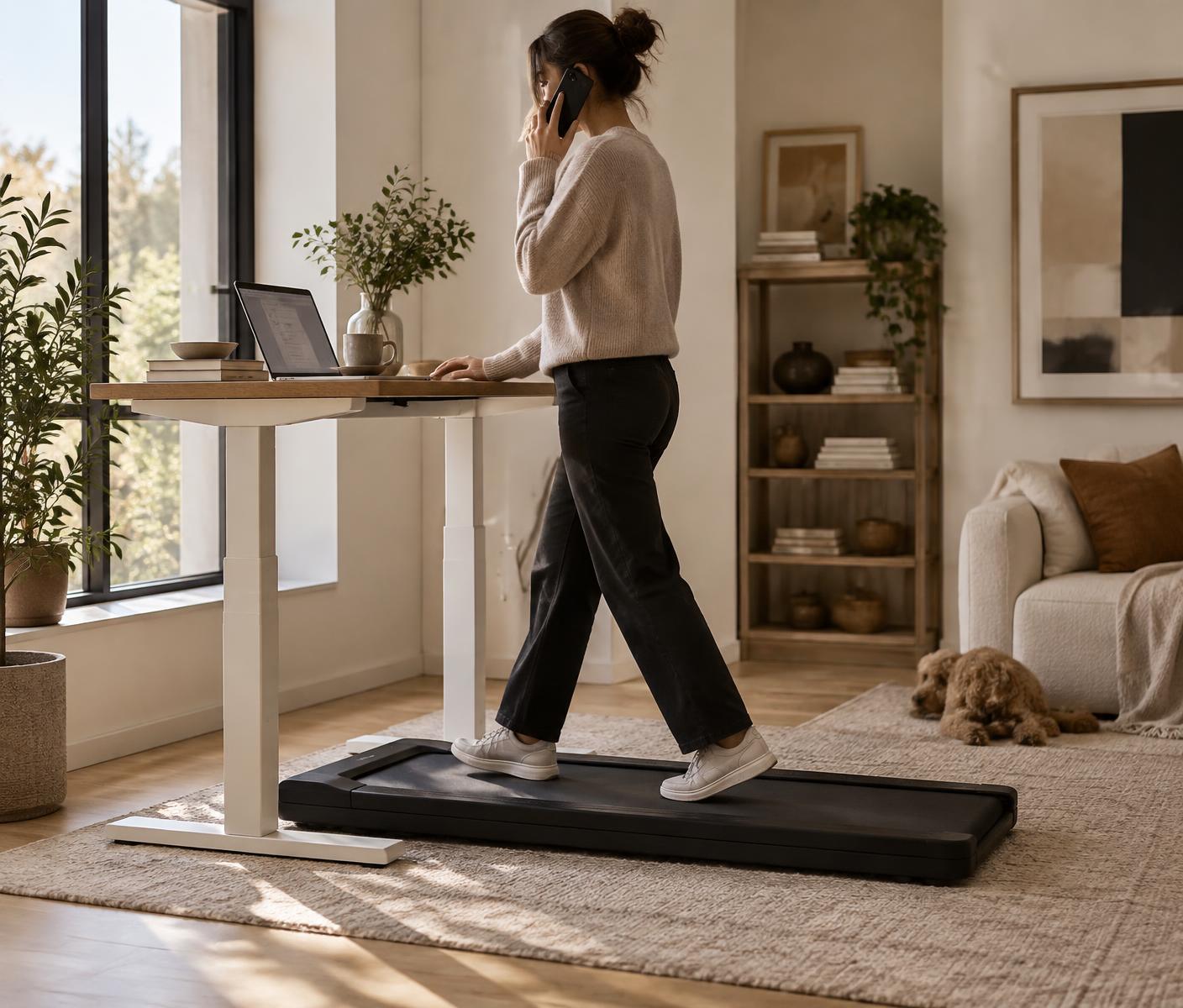
Those little bits of movement throughout the day really do add up. And none of these positions is automatically “bad.” The problem is staying in any one position for too long.
And your brain is involved too…
Your brain has an internal map of your body, often illustrated by the cortical homunculus.
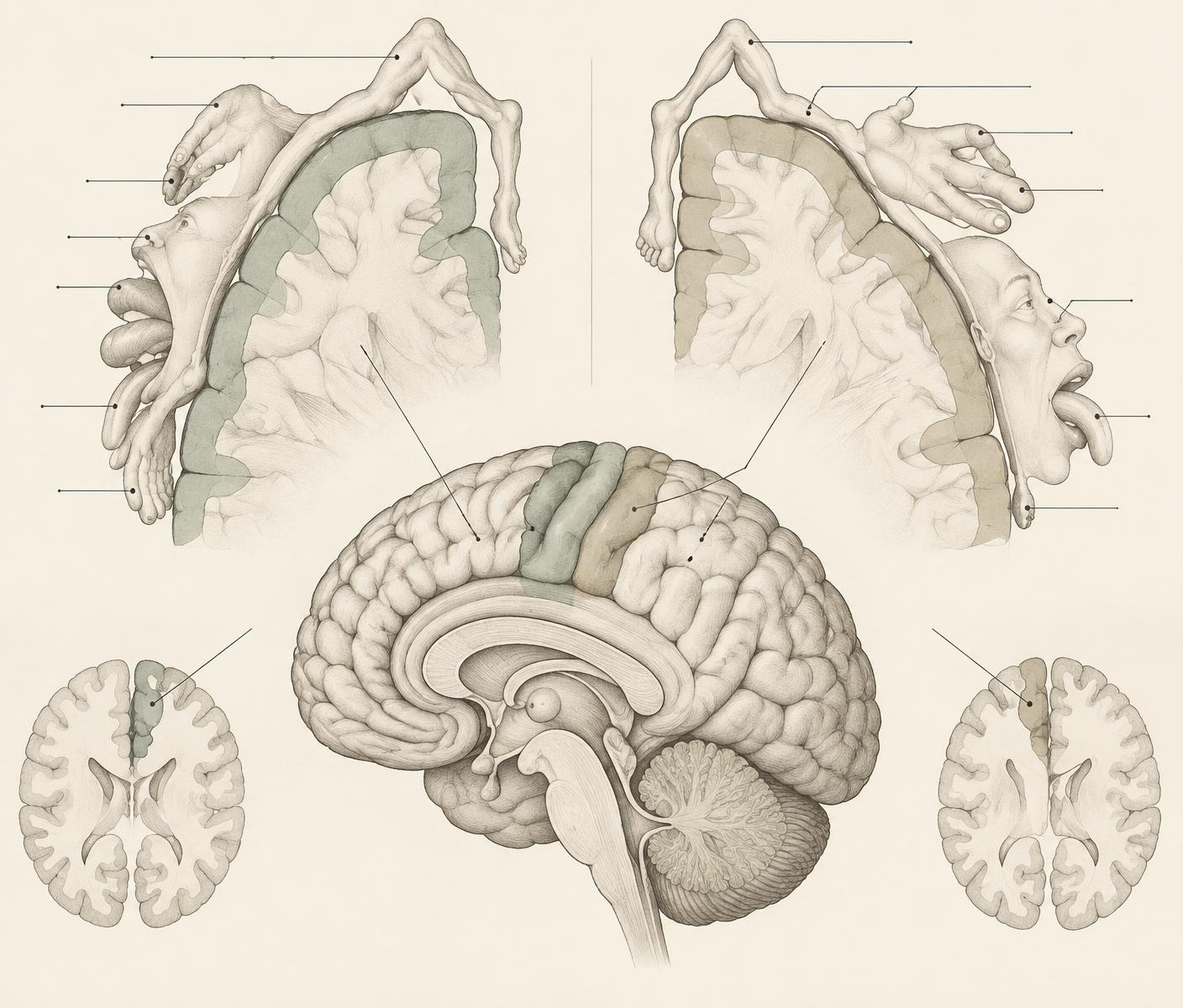
That map isn’t fixed. Your brain is constantly updating its information about where your body is and how it’s moving.
So changing position and moving throughout the day doesn’t just give your muscles and joints a break — it gives your brain more information to work with too.
The takeaway
Stop hunting for the perfect way to sit. Instead, make movement part of your working day.
Sit. Stand. Stretch. Walk. Shift.
Your body doesn’t need perfect posture.
It needs options.
Because your best posture isn’t a position.
It’s the next one.