
Pregnancy-Related Pain
Around half of pregnant women experience pelvic or back pain. It's common — and it's genuinely treatable, at any stage.
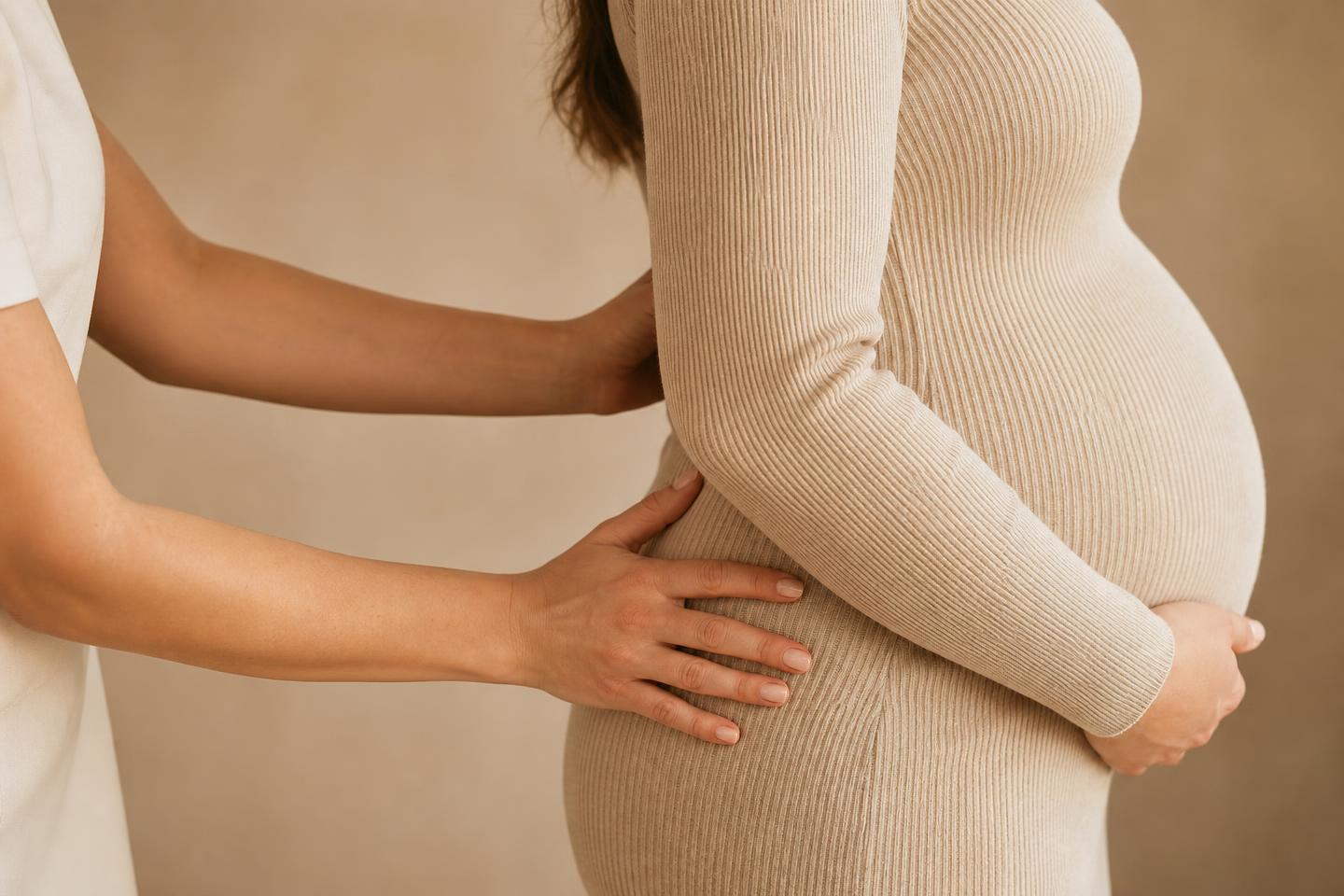
What is pregnancy-related pain?
Pregnancy-related pelvic girdle pain is felt around the pubic bone, the back of the pelvis or the buttocks, and it typically flares with single-leg activities: stairs, rolling over in bed, getting out of a car. Pregnancy-related low back pain sits higher and behaves more like ordinary back pain, though the changing load makes it more persistent.
Hormonal softening of ligaments plays a part, but load and muscle control matter more. That's good news, because both can be influenced by treatment rather than simply waited out.
Common symptoms
- Pain over the pubic bone, sometimes with clicking or grinding
- Deep buttock or sacroiliac pain, often one-sided
- Pain turning in bed, dressing or climbing stairs
- A waddling walk or difficulty weight-bearing on one leg
- Pain radiating into the thigh or down the leg
- Rib or mid-back pain in later pregnancy
What causes it
- Rapid changes in load and centre of gravity
- Ligament laxity from pregnancy hormones
- Reduced deep abdominal and gluteal muscle control
- Asymmetrical daily habits like standing on one hip
- Previous pelvic or back injury
- Prolonged sitting, standing or repetitive lifting
How physiotherapy helps
Manual therapy, targeted exercise and practical load advice have good evidence for reducing pregnancy-related pelvic girdle and back pain, and combined approaches work best.
Treatment is adapted to your trimester throughout, and we focus as much on how you move through the day as on the exercises themselves — small changes to sleeping, driving and lifting habits often bring quick relief.
- Gentle joint mobilisation and soft tissue release
- Pelvic and gluteal strengthening in safe positions
- Supportive taping and pelvic belt fitting
- Sleep, sitting and lifting strategies
- Pelvic floor assessment and coordination work
- Birth preparation and postpartum planning
When to seek treatment
- As soon as pain interferes with sleep or walking
- If pain is worsening week on week
- If you had pelvic girdle pain in a previous pregnancy
- If you have leg weakness, numbness or bladder changes — seek medical review urgently
Frequently asked questions
Let's get you moving again
If this sounds like what you're dealing with, an assessment is the quickest way to understand it properly. Pregnancy-Related Pain responds well to the right plan.