
Recovery after birth deserves a real plan
Six weeks isn't a finish line. Structured postpartum rehabilitation to restore your core and pelvic floor and get you back to what you love — whether that's your first birthday or your tenth.

About postpartum rehabilitation
The postpartum body has been through a nine-month adaptation followed by a birth, and it deserves the same rehabilitation we'd give any athlete after a major event. Yet most women are discharged at six weeks with a brief check and no plan for what comes next.
Postpartum rehabilitation fills that gap. It's relevant whether you gave birth six weeks or sixteen years ago, whether you had a vaginal birth or a caesarean, and whether your goal is to lift your toddler pain-free or to run a marathon.
Who this is for
- Any woman at any point after giving birth
- Those with leaking, heaviness, pain or a persistent tummy gap
- Women recovering from caesarean or perineal tearing
- Anyone wanting a safe, structured return to running or the gym
- Women preparing their body before a next pregnancy
- Mums with back, neck or wrist pain from feeding and carrying
Common symptoms
If any of these sound familiar, an assessment is worthwhile — you don't need to wait until symptoms are severe.
- Leaking with sneezing, running, jumping or lifting
- Vaginal heaviness or a dragging sensation
- A tummy gap or doming down the midline
- A tight, numb, tethered or painful caesarean scar
- Pain with intercourse or penetration after birth
- Persistent low back, pelvic or hip pain
- Neck, upper back or wrist pain from feeding and carrying
- Feeling weak, disconnected or 'not yourself' in your body
Conditions treated
- Diastasis recti (abdominal separation)
- Postpartum pelvic floor weakness and incontinence
- Pelvic organ prolapse
- Caesarean and perineal scar recovery
- Postpartum back, hip and coccyx pain
- Painful intercourse / pain with penetration after birth
- Return-to-running assessment

What to expect
Your birth story
We talk about your pregnancy, birth, feeding, sleep and current demands. All of it shapes recovery, and all of it is heard without judgement.
Full postpartum assessment
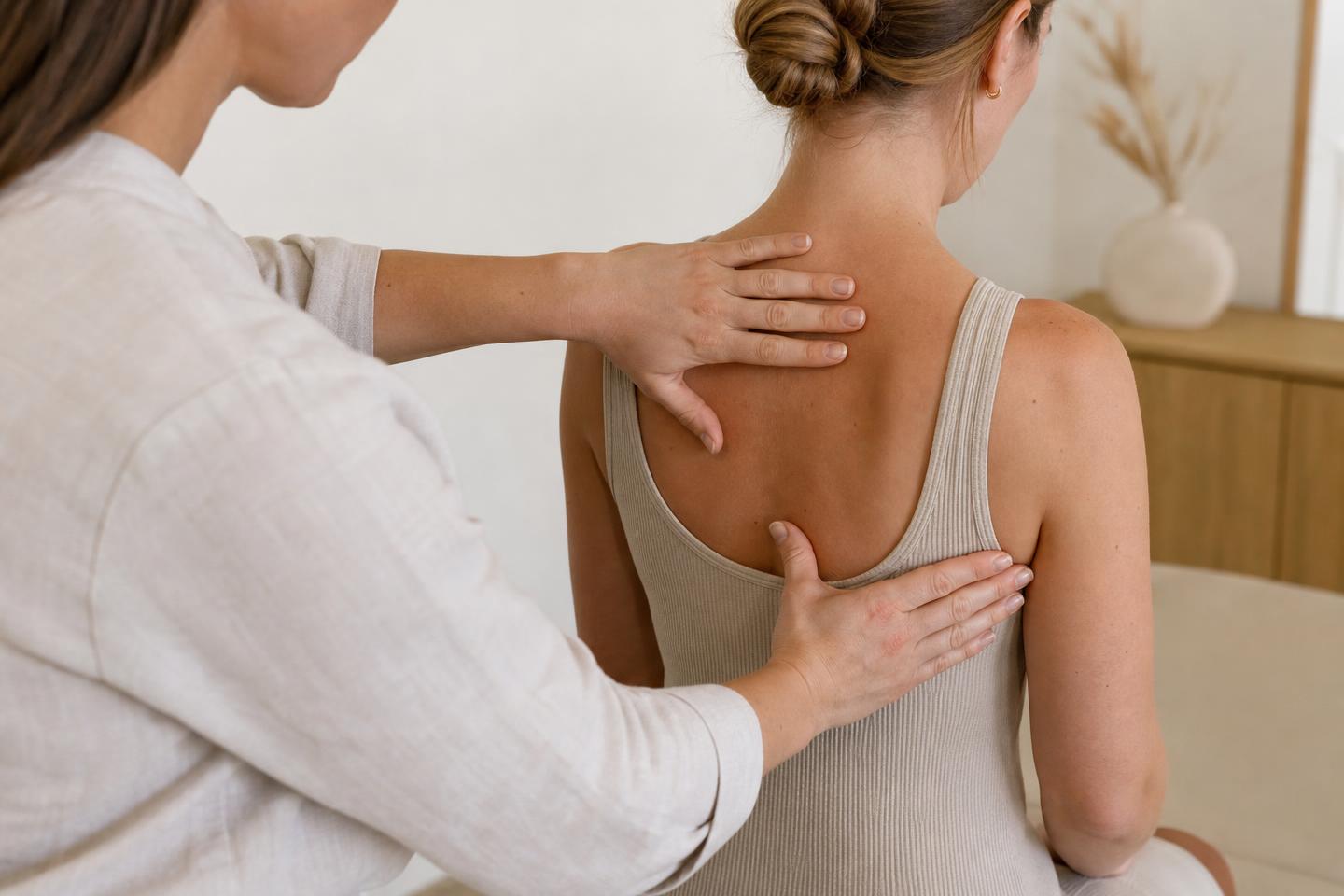
Abdominal wall and diastasis measurement, scar assessment, breathing and pressure management, hip and spine screening, and consented pelvic floor examination to establish strength, tone and support.
Rebuilding the foundation
Manual therapy and scar work where indicated, breathing and pelvic floor coordination, deep abdominal retraining, and strategies for feeding postures, carrying and lifting toddlers.
Progressive return to load
Strength work progresses into impact using objective return-to-running criteria, so your first run is a planned step rather than a hopeful experiment. Babies and toddlers are always welcome in the room.
How physiotherapy helps
Objective readiness
Return-to-running guidelines give us measurable criteria instead of arbitrary timelines.
Function over appearance
Diastasis work focuses on how your abdominal wall transfers load, which is what actually restores strength and comfort.
Fewer long-term problems
Addressing pelvic floor symptoms early reduces the likelihood of them persisting into later life.
Confidence in your body again
Knowing exactly where you are in recovery is often as valuable as the exercises themselves.
Frequently asked questions
Your recovery starts whenever you decide
Book a postpartum assessment in Johannesburg — six weeks or sixteen years after birth, you're welcome here.