
Jaw pain deserves more than a night guard
Clicking, clenching, difficulty chewing and jaw-related headaches respond well to targeted physiotherapy of the jaw, neck and surrounding muscles.
About tmj & jaw pain physiotherapy
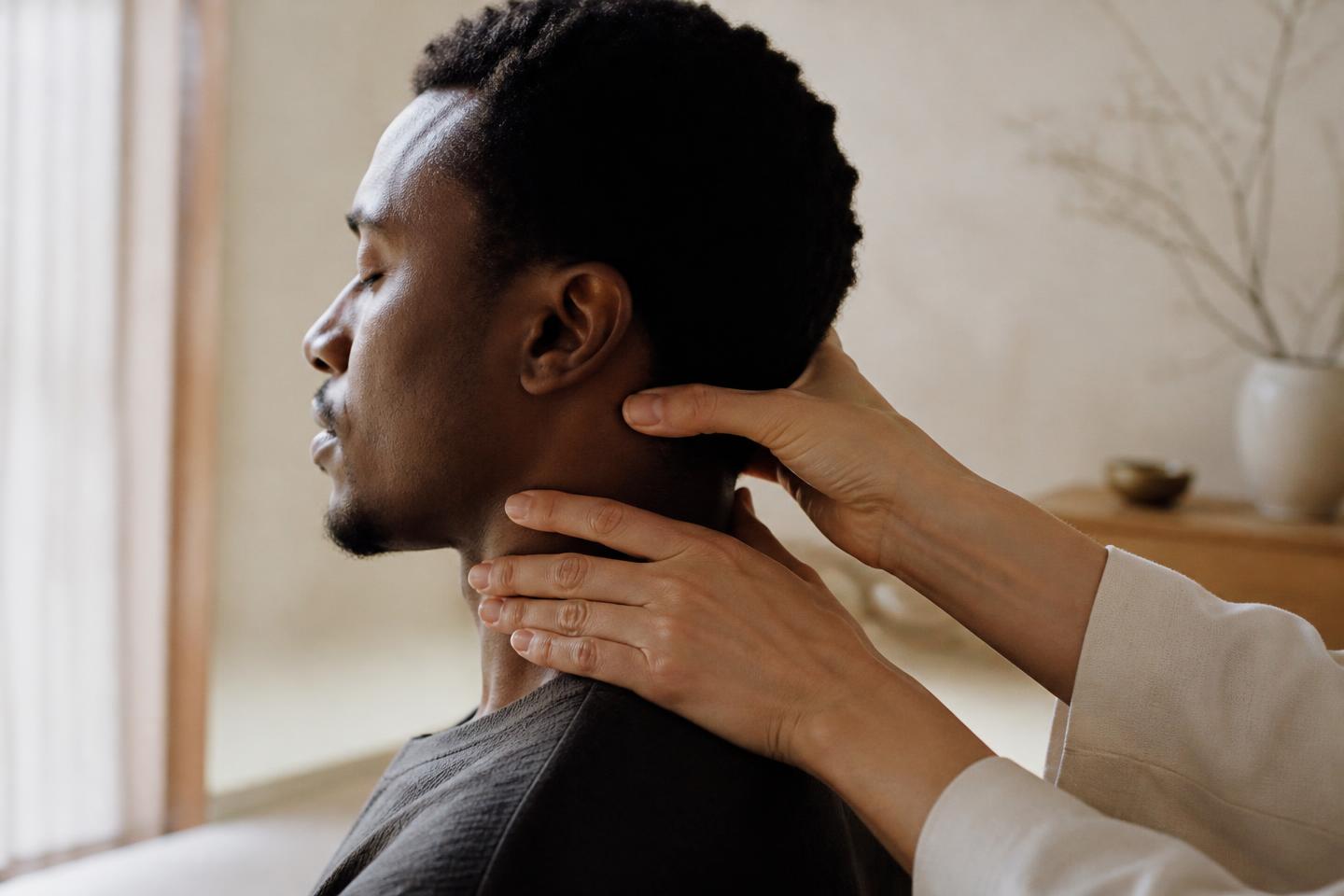
The temporomandibular joint (TMJ) is one of the busiest joints in the body — it moves every time you speak, chew, swallow or yawn. When it becomes irritated or the muscles around it stay in a state of tension, the result can be pain in the jaw, face, ear or temple, along with clicking, locking and headaches.
I completed postgraduate training in TMJ assessment and treatment because jaw pain is so often treated in isolation. In practice it rarely travels alone: the upper neck, breathing pattern, stress load and sleep quality are usually part of the picture, and treating them together produces far better results.
Who this is for
- Anyone with jaw pain, clicking or locking
- People who clench or grind their teeth, day or night
- Patients referred by a dentist for jaw physiotherapy
- Those with facial pain, ear pain or jaw-related headaches
- People recovering from dental work, orthodontics or jaw surgery
- Anyone whose jaw tightens noticeably under stress
Common symptoms
If any of these sound familiar, an assessment is worthwhile — you don't need to wait until symptoms are severe.
- Pain in the jaw, cheek, temple or in front of the ear
- Clicking, popping or grating when opening or closing
- Difficulty or pain when chewing tougher foods
- Jaw locking open or closed
- Limited or uneven mouth opening
- Morning jaw tightness or tooth wear from grinding
- Ear fullness, ringing or dizziness with jaw movement
- Headaches in the temples or behind the eyes
Conditions treated
- Temporomandibular joint dysfunction (TMD)
- Myofascial jaw and facial pain
- Bruxism (teeth grinding) and daytime clenching
- Disc displacement with or without clicking
- Jaw stiffness after dental or orthodontic treatment
- Post-surgical jaw rehabilitation
- Jaw-related headaches and ear symptoms

What to expect
Understanding your jaw
Your symptom history, dental and orthodontic background, stress and sleep patterns, and how the jaw behaves through a typical day.
Assessment
Measured mouth opening, joint movement and sounds, muscle tenderness inside and outside the mouth, plus upper cervical spine and breathing assessment.
Treatment
Gentle joint mobilisation, intra-oral and external muscle release, dry needling where appropriate, upper neck treatment and relaxation strategies.
Retraining and habits
Jaw control and mobility exercises, clenching awareness, posture and breathing work, and practical advice on eating, sleep and stress load.
How physiotherapy helps
Comfortable chewing again
Reduced pain and improved mouth opening make eating and speaking easier within a few weeks.
Fewer jaw headaches
Treating the muscles and joints that refer into the head reduces headache frequency.
Better sleep
Less night-time clenching often means waking with less jaw and neck tension.
Joined-up care
Treatment complements your dentist's plan rather than duplicating it.
Frequently asked questions
Let's settle your jaw pain
Book a TMJ assessment in Johannesburg for jaw pain, clicking or clenching — for women and men alike.