
TMJ & Jaw Pain
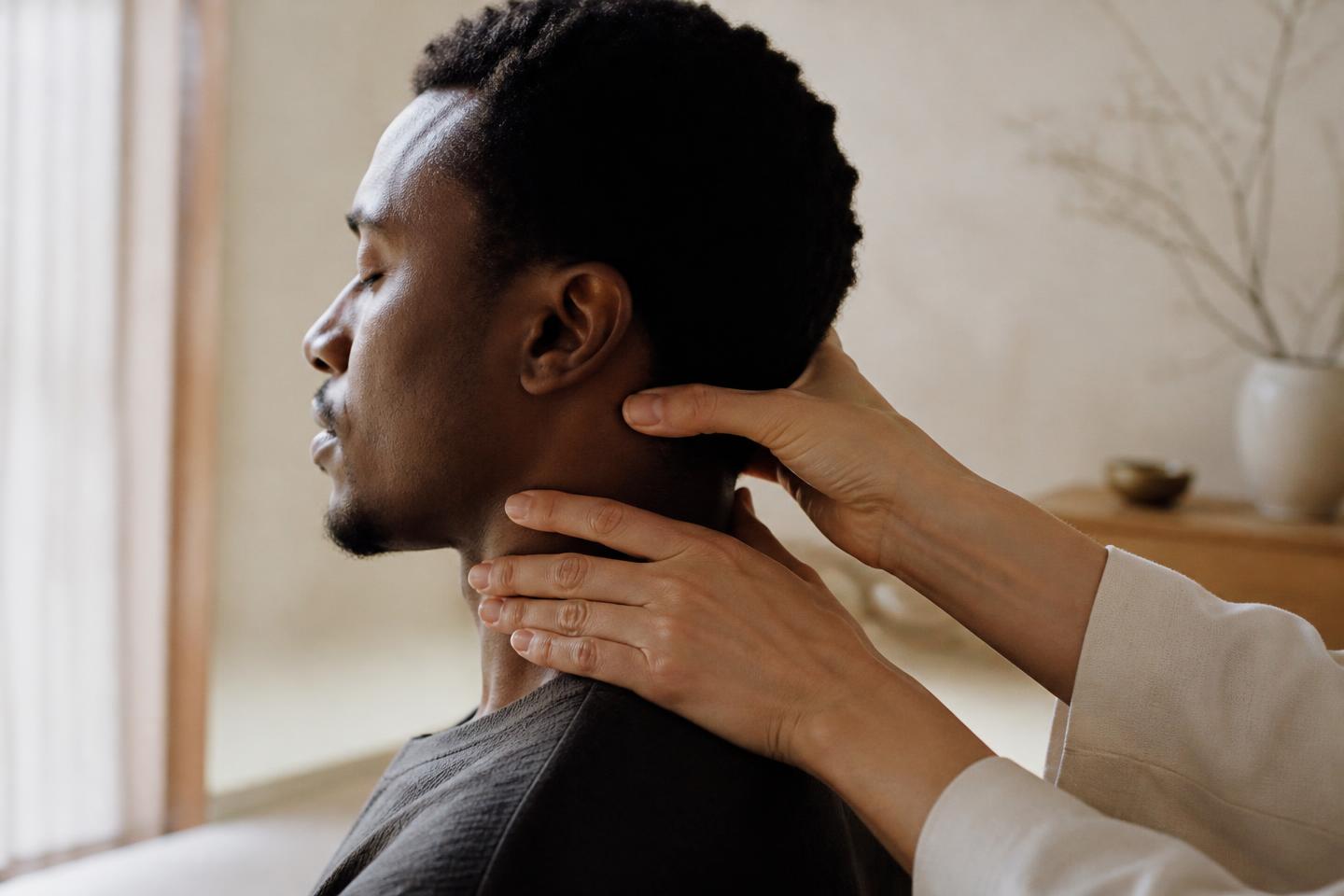
Jaw pain responds well to targeted physiotherapy of the joint, the surrounding muscles and the upper neck that so often drives it.
What is tmj & jaw pain?
Temporomandibular dysfunction (TMD) describes pain and altered movement in the jaw joint and the muscles that control it. Because the joint works every time you speak, chew, swallow or yawn, symptoms can become persistent quickly.
The joint has a small cartilage disc that should glide smoothly as you open and close. When muscle tension, clenching, injury or dental work disturbs that movement, you may notice clicking, catching, uneven opening or pain that spreads into the temple, cheek and ear.
Jaw pain rarely travels alone. The upper neck, breathing pattern, sleep quality and stress load are usually part of the picture, which is why treating the jaw in isolation often gives only short-lived relief.
Common symptoms
- Pain in the jaw, cheek, temple or in front of the ear
- Clicking, popping or grating on opening and closing
- Jaw locking open or closed
- Limited or uneven mouth opening
- Pain when chewing tougher foods
- Morning jaw tightness or tooth wear from grinding
- Ear fullness, ringing or dizziness
- Headaches in the temples or behind the eyes
What causes it
- Daytime clenching or night-time grinding (bruxism)
- Prolonged stress and raised muscle tension
- Upper neck joint and muscle dysfunction
- Prolonged dental or orthodontic treatment
- Direct trauma to the jaw or a whiplash injury
- Habitual mouth breathing or altered tongue position
- Nail biting, chewing gum and other sustained jaw habits
How physiotherapy helps
Assessment measures your mouth opening, tests joint movement and sounds, examines the jaw muscles inside and outside the mouth, and checks the upper neck and breathing pattern, so we know exactly which structures are producing your symptoms.
Treatment combines gentle joint mobilisation, muscle release, dry needling where appropriate, upper cervical treatment and jaw retraining. Most people notice change within the first two sessions and settle over four to six.
- Gentle temporomandibular joint mobilisation
- Intra-oral and external jaw muscle release (with consent)
- Dry needling where appropriate
- Upper cervical spine treatment
- Jaw control, mobility and coordination exercises
- Clenching awareness and relaxation strategies
- Breathing and posture retraining
When to seek treatment
- Jaw pain that has lasted more than two weeks
- Clicking accompanied by pain or limited opening
- Episodes of the jaw locking
- Jaw pain with headaches or ear symptoms
- Waking with jaw tightness or evidence of grinding
Frequently asked questions
Let's get you moving again
If this sounds like what you're dealing with, an assessment is the quickest way to understand it properly. TMJ & Jaw Pain responds well to the right plan.