
Women's health physiotherapy that takes you seriously
For the symptoms that are common but never normal. Private, unhurried appointments in Johannesburg where you're listened to first and treated with real clinical depth.

About women's health physiotherapy
Women's health physiotherapy is a field of physiotherapy that focuses on the pelvis, abdomen, spine and the deep muscles that support them, across every stage of a woman's life. It covers everything from bladder and bowel function to pelvic pain, pregnancy, postpartum recovery, fertility support and the changes that arrive with menopause.
Many of the symptoms I treat are extremely common — and that is exactly why they get dismissed. Leaking when you sneeze, pain during sex, heaviness in the pelvis, a tummy that still feels disconnected years after birth: these are common, but they are not something you have to accept. In the vast majority of cases they respond well to skilled assessment and a properly individualised treatment plan.
Who this is for
- Women of any age noticing bladder, bowel or pelvic symptoms
- Anyone experiencing pelvic, hip, tailbone or lower abdominal pain
- Women who are pregnant, planning a pregnancy or in the postpartum year
- Women navigating perimenopause and menopause
- Anyone recovering from gynaecological or abdominal surgery
- Athletes and active women whose symptoms limit training
Common symptoms
If any of these sound familiar, an assessment is worthwhile — you don't need to wait until symptoms are severe.
- Leaking urine when you cough, laugh, jump or run
- A sudden, urgent need to pass urine, or going very frequently
- Heaviness, dragging or bulging in the vagina
- Pain with sex, tampon use or gynaecological examinations
- Persistent lower abdominal, pelvic or tailbone pain
- A tummy that domes, bulges or feels weak with effort
- Difficulty emptying the bladder or bowel completely
- Loss of confidence in exercise because of symptoms
Conditions treated
- Stress and urge urinary incontinence
- Pelvic organ prolapse
- Chronic pelvic pain and painful sex
- Overactive and underactive pelvic floor muscles
- Diastasis recti and abdominal wall weakness
- Endometriosis-related pain
- Pregnancy-related pelvic girdle and back pain
- Post-surgical rehabilitation, including caesarean and hysterectomy

What to expect
A conversation first
Your first appointment begins fully clothed, sitting down, talking. I want to understand your symptoms, your history, your daily demands and what you'd love to get back to. Nothing happens until you understand it and agree to it.
A thorough assessment
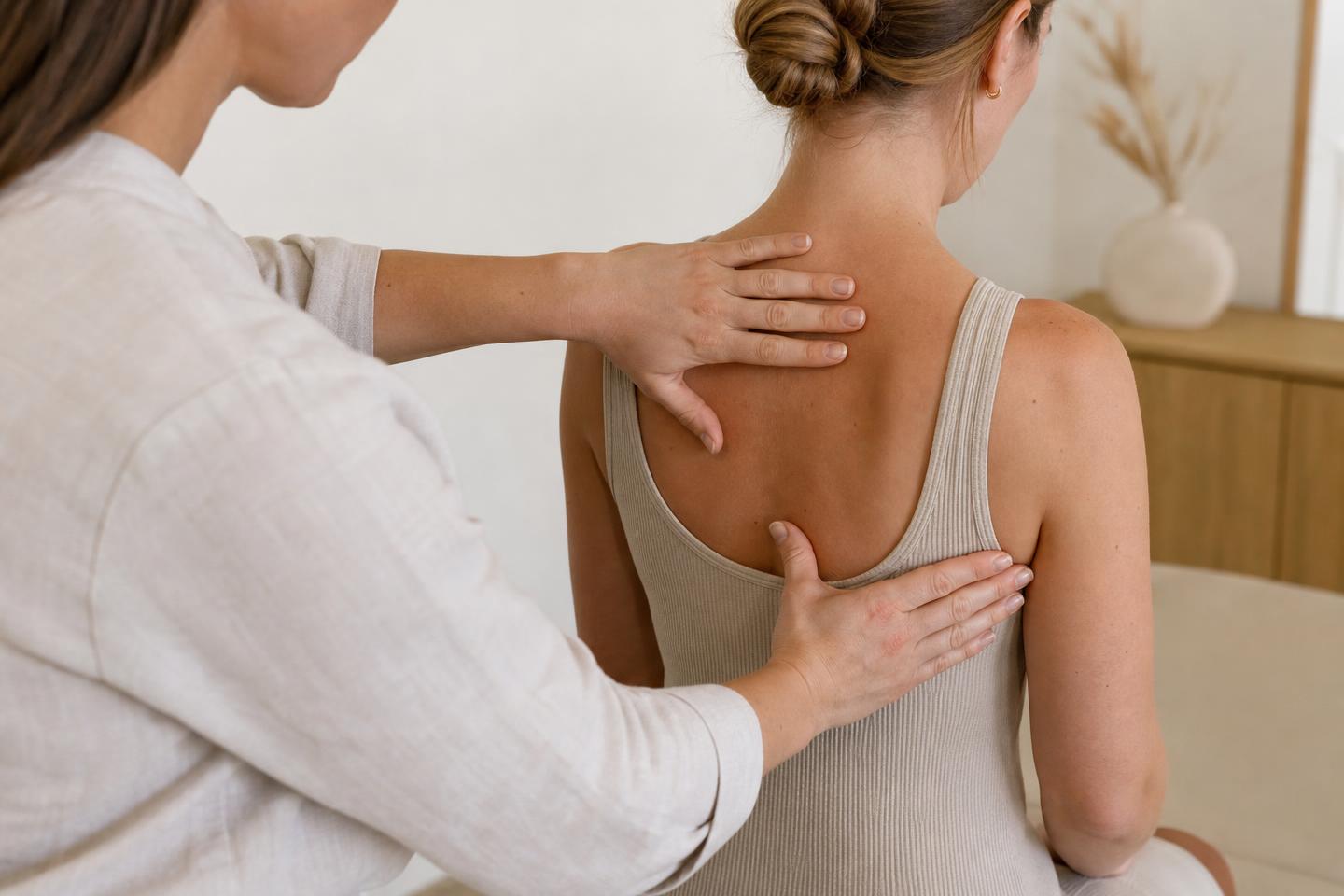
Depending on your symptoms, this may include posture, breathing, spine and hip movement, abdominal wall assessment and functional testing such as walking, squatting or jumping. Where relevant, and only with your explicit consent, an internal pelvic floor examination gives the most accurate picture of muscle strength, tone and coordination. You can decline this at any point and we will still make excellent progress.
Clear explanation
I'll show you what I found in plain language, often with diagrams, so you leave understanding your own body rather than holding a label you can't interpret.
Treatment and a plan
Treatment usually starts in that first session. Depending on your needs, it may include hands-on release, breathing and pelvic floor retraining, bladder or bowel strategies, load management advice and a short, realistic home programme that fits your actual life.
How physiotherapy helps
Symptom relief that lasts
Because treatment targets the underlying cause rather than the symptom alone, improvements tend to hold once you finish your course of care.
Confidence in your body
Knowing what your pelvic floor is doing, and why, replaces guesswork and worry with a clear sense of control.
A safe return to exercise
Structured, progressive loading lets you return to running, lifting and sport without triggering symptoms along the way.
A conservative first option
For many pelvic health conditions, physiotherapy is the recommended first-line treatment and can reduce or delay the need for surgery.
Frequently asked questions
You don't have to live with it
Book a private, unhurried women's health assessment in Johannesburg and let's find out what's really going on.